What Is Six Flags Announcing? A Theory About Its Next Move
Six Flags has more to say before 2027, and the shape of what is coming is already visible in what the company has done all year.
What follows is a theory. It is analysis, not reporting, and it is clearly labeled as such throughout. The facts underneath it are sourced. The conclusion drawn from them is ours, and you should weigh it accordingly. If you want only the confirmed facts with no interpretation, we keep those separately in Six Flags in 2027: which parks were sold and what is actually coming.
The theory in one sentence
Six Flags is not finished reshaping itself, and the next chapter is less about any single roller coaster than about which parks the company intends to become known for.
What the company has already done
In March 2026, Six Flags agreed to sell seven parks to EPR Properties for $331 million. Valleyfair, Worlds of Fun, Michigan's Adventure, Schlitterbahn Waterpark Galveston, Six Flags St. Louis, Six Flags Great Escape, and Six Flags La Ronde all left the portfolio. The company set out its reasoning in Looking Forward: A New Chapter for Six Flags.
Read the wording carefully, because it is unusually specific. Six Flags said the sale lets it "concentrate on the Six Flags parks with the greatest potential for innovation, expansion, and elevated guest experiences," leaving it "better positioned than ever to invest in new rides and attractions."
That is a company telling you, in its own words, that it intends to run fewer parks and spend more on each one.
Why we think that was a first round rather than a finish
Three things point the same direction.
The strategy was described as ongoing, not completed. Six Flags framed the sale as part of a portfolio strategy. It did not describe it as the end of one. A company that had finished pruning usually says so.
The economics favor concentration. Capital spread thinly across dozens of parks produces incremental upgrades everywhere and a headline attraction nowhere. Capital concentrated on a shorter list produces the kind of ride that makes national news. The 2027 slate already looks like the second version of that choice.
The remaining lineup splits cleanly. There is a clear tier of properties with large catchment areas and room to build, and a longer tail of smaller parks where the return on a nine-figure coaster is much harder to justify.
What the 2027 slate suggests
If the theory is right, spending should be visibly lopsided toward the flagships. So far it is.
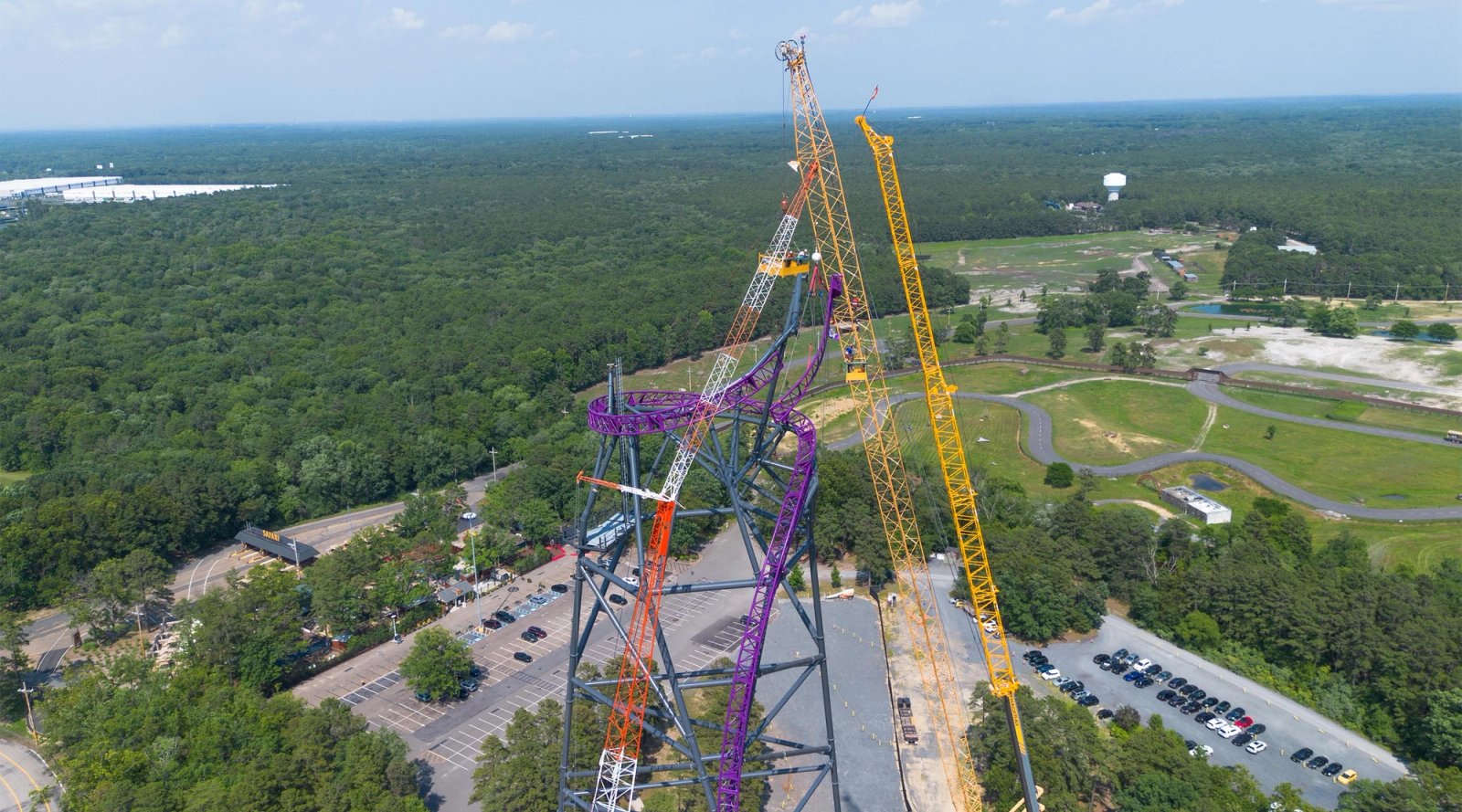
Bakunawa arrives at Six Flags Great Adventure, a spinning launch coaster standing 382 feet and reaching 100 mph, with free-spinning floorless trains. Six Flags describes it here. This is a flagship-scale project at a flagship park.
Camp Timber Trail opens at Six Flags Great America, an entire new area with nine attractions anchored by a suspended family coaster called Sky Hawk, detailed by the park. Note what this is: a land, not a single ride, at a park marking its 50th anniversary. Companies do not build lands at properties they are preparing to sell.
Six Flags Magic Mountain is still holding its card. The park teased "Glide into the Future" with the date 9.10.26, and as Theme Park Insider reported, that reveal had already slipped once.
The strongest argument against this theory
Honesty requires stating the case that cuts the other way.
Six Flags has spent 2026 talking about thrills, not balance sheets. Its public language has been about record-breaking rides, and the marketing vocabulary the company uses when it addresses enthusiasts is about height, speed, and firsts. Portfolio moves are usually communicated to investors in the flat, careful language of a financial release, not to fans.
So it is entirely possible the next announcement is simply a very large roller coaster, and nothing more. A theory that cannot be wrong is not worth much, and this one can be.
The version we find most persuasive combines both: continued portfolio work paired with a multi-year capital commitment to the parks that remain. That would be genuinely notable to the industry, and it would explain why a company would describe a ride announcement in the language of corporate positioning.
What it would mean for you
If the flagships absorb more of the budget, the practical effects are predictable. Expect more construction walls and more closed attractions at the big parks while projects are built. Expect opening-season crowds at the parks that get the headliners, because a new record-breaking coaster is the most reliable crowd magnet in the industry.
That is where live data does more for you than a press release. The difference between a walk-on morning and a two hour line is almost always the day you chose, not the ride you chose. Thoosie tracks live wait times and historical crowd patterns across these parks so you can pick the day deliberately.
Frequently asked questions
Has Six Flags said it is selling more parks?
No. Nothing beyond the seven-park sale to EPR Properties has been announced. The argument that more may follow is a theory based on the company's stated strategy, not a confirmed plan.
Which parks did Six Flags sell in 2026?
Valleyfair, Worlds of Fun, Michigan's Adventure, Schlitterbahn Waterpark Galveston, Six Flags St. Louis, Six Flags Great Escape, and Six Flags La Ronde, for $331 million.
What is the biggest new Six Flags ride coming?
Bakunawa at Six Flags Great Adventure, announced at 382 feet and 100 mph for 2027.
Is Six Flags Great America being sold?
It was not part of the 2026 sale, and the park is opening an entire new area in 2027, which points away from a sale rather than toward one.
This is opinion and analysis. It reflects our reading of publicly available information as of September 2026 and will be updated as Six Flags confirms more.
 Thoosie