Use the 30/30 Lightning Rule So Your Family Moves Indoors the Same Moment Park Staff Does
Summer afternoons and theme parks go together perfectly, right up until a line of storms rolls in off the Gulf or builds over the mountains behind the park. Most families end up in one of two situations: either they wait too long and get caught in a scramble, or they bolt indoors at the first dark cloud and miss a totally rideable hour. There is a middle path, and it comes from the same standard that park operations teams use.
The Insight
The National Weather Service and CDC both endorse what is called the 30/30 lightning rule. When you see a lightning flash, count the seconds until you hear thunder. If that gap is 30 seconds or less, the strike was within roughly six miles of where you are standing. At that distance, the next bolt could land anywhere in the area, including on you. Once you hear the last rumble of thunder, you stay in a fully enclosed building for 30 minutes before heading back out.
Parks run on this exact standard. When operations staff starts clearing attractions and moving guests, they are responding to the same trigger. If you know the rule yourself, you move at the same time they do, not two minutes behind when the lines for indoor spaces are already forming.
Why This Works
Lightning is the one weather hazard where the gap between "probably fine" and "real danger" closes fast. A storm six miles out can produce a ground strike under a clear patch of sky right above you, which is why the rule is conservative by design.
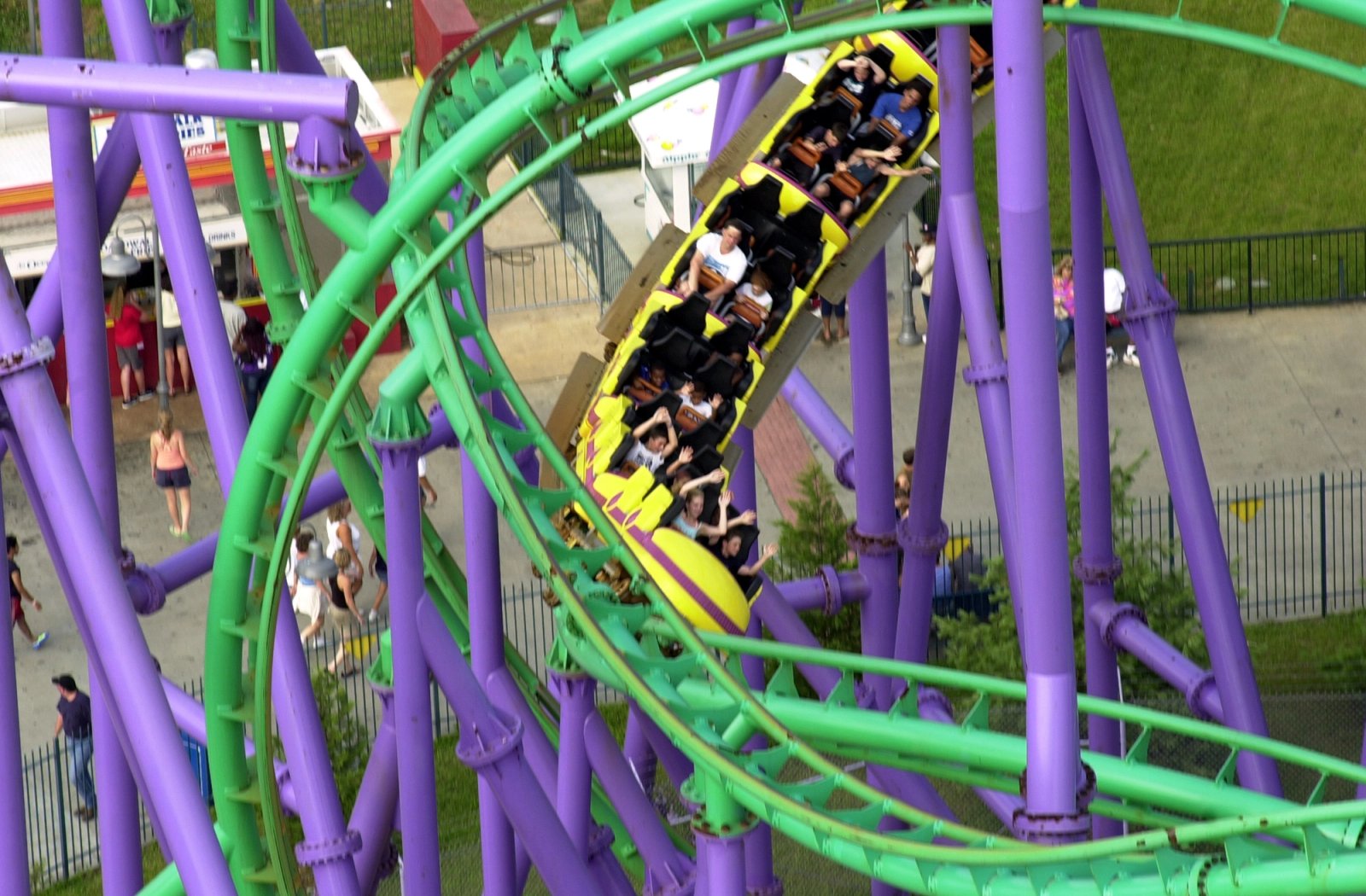
The other reason this works at a park specifically is that attractions sit on wide open midways with tall steel structures and water features everywhere. A pavilion or queue canopy does not count as shelter. Metal roofs and open sides still leave you exposed. A fully enclosed building, a ride building, an arcade, a restaurant, a theater attraction, is the actual target.
How to Use This on Your Next Visit
When the sky starts building in the afternoon, make a mental note of two or three fully enclosed buildings near whatever land you are in. Pick landmarks your kids can actually recognize. Then watch the sky, and count.
Flash. One one-thousand, two one-thousand, three one-thousand. If you hit 30 before you hear thunder, the storm is far enough away to keep riding. If you hit 20 or fewer, start walking. You do not need to run. You do not need to cause anxiety. You just say "let's go check out the air conditioning" and you walk the family into the nearest enclosed building.
Once you are inside, use that 30-minute window well. Grab a table, look at the Thoosie wait time map to see which rides tend to rebound fastest after a storm, and decide your post-storm plan before you step back outside.
A Quick Example
You are in the back corner of a park at 2:30 in the afternoon. You see a flash over the tree line. You count: one one-thousand, two one-thousand... eighteen one-thousand. Thunder. That is under 30 seconds. You tell the group you want to duck into the ride building right next to you, the one with the 4D show that always has good capacity anyway. You catch the show. By the time it ends, you check Thoosie and see that the storm has passed, wait times have reset across the park, and a coaster you had been watching all morning is sitting at 15 minutes. You walk straight to it.
That is not a lost hour. That is a perfectly timed reset.
Thoosie tracks live wait times and updates through weather events, so you always know which rides are back online and how long the lines are the moment parks reopen attractions. Pair the 30/30 rule with Thoosie and a storm becomes one of the most useful things that can happen to your afternoon.
 Thoosie